Food Supplements
Selling food supplements in the EU means meeting Directive 2002/46/EC, the fortification rules under Regulation (EC) 1925/2006, and - where relevant - the novel foods regime, with risk assessment by EFSA and notification handled at member-state level.
At Taylored Consultancy Ltd, we make food supplement compliance clear and stress-free. We guide you through permitted ingredients, member-state notification, labelling and health claims - including the national maximum-level differences that catch many brands out.
Clearing the path to market -
regulatory and quality expertise that gets your food supplements compliant, safe, and ready for market.
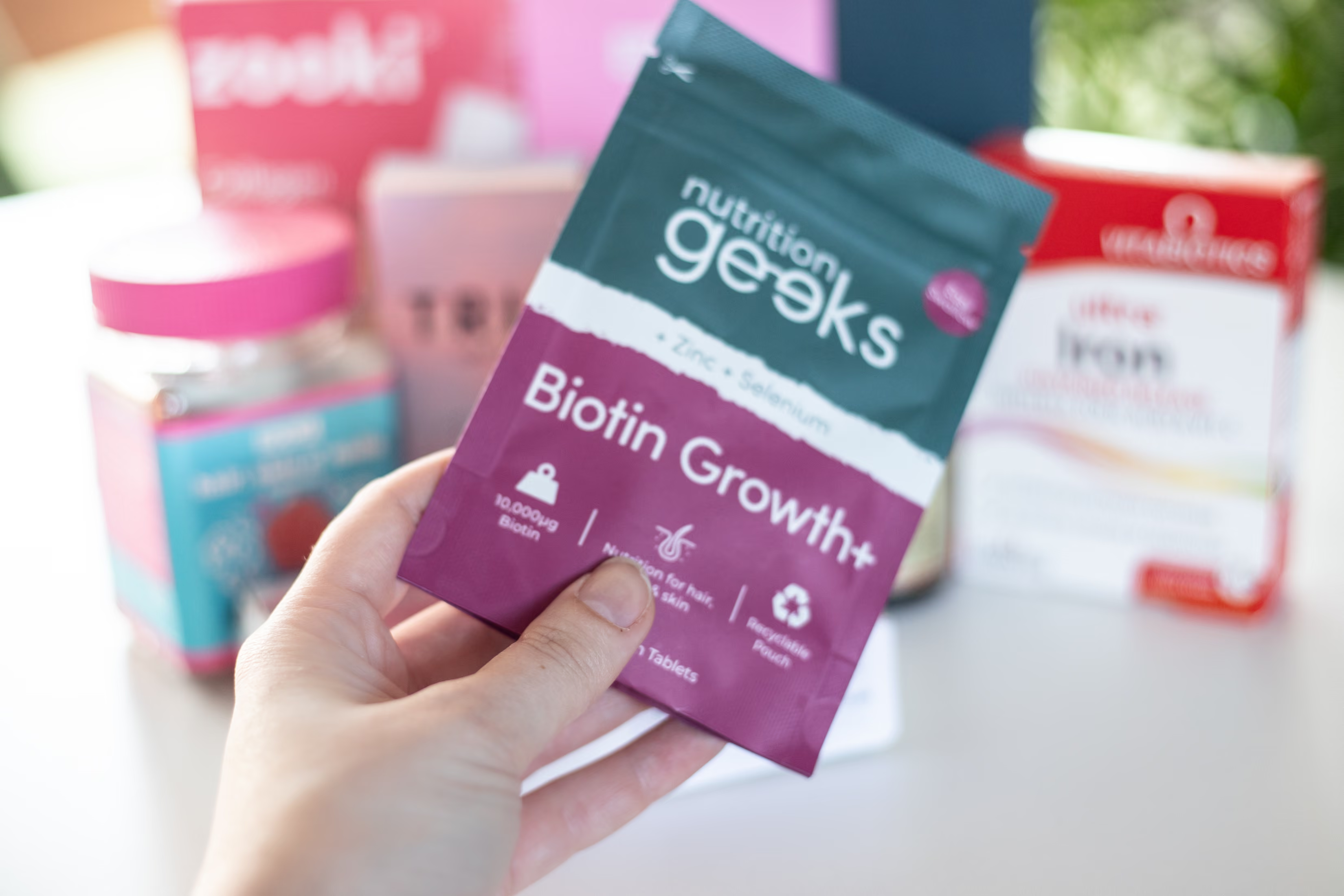
We check your formulation against the permitted vitamins and minerals (Annex I) and approved forms (Annex II), other substances (including botanical extracts), and flag national permitted level differences between member states.
We help you assess whether any ingredient needs authorisation under Regulation (EU) 2015/2283 on novel foods.
Notification rules differ by country. We help you notify your products correctly in each member state where you sell.
We review your labelling against the Food Information to Consumers Regulation (1169/2011) and supplement-specific rules both at harmonised EU and Member State level
We can act as your EU Food Business Operator. Absorbing your products into our quality management system (QMS) we ensure your products are compliant and remain compliant on the market.
We check your claims against the EU Register of authorised health claims under Regulation (EC) 1924/2006 and the correct use of any on-hold botanical claims.
We review your products country-by-country and identify anything that needs fixing before launch.
We help you put HACCP, ISO 22000 or a GFSI-recognised scheme (BRCGS, FSSC 22000, IFS) in place.
Regulations can feel like a headache, but they don't have to be. We make sure you're covered, compliant, and ready to sell - without unnecessary delays or legal pitfalls.
ISO 22000 - Food safety management
HACCP - Hazard Analysis and Critical Control Points
GFSI-recognised certifications (usually BRCGS, FSSC 22000, IFS)
ISO 9001 - General quality management
Not automatically. EU-wide rules like Regulation (EC) 1924/2006 on health claims and the Novel Food Regulation set a common baseline, but individual member states can apply their own maximum permitted levels for vitamins and minerals and their own notification requirements before a product can be sold. We map out where your formulation needs country-specific adjustment rather than assuming one label works everywhere.
No, but a significant number do, and it's one of the most commonly missed steps for brands entering the EU. Several member states require formal notification, sometimes with a fee or specific dossier, before a supplement can legally go on sale within their borders. We handle member-state notification as part of our EU service, so you're not caught out market by market.
EFSA carries out the scientific risk assessment behind EU-wide rules, such as novel food evaluations and the health claims permitted under Regulation (EC) 1924/2006, but EFSA doesn't approve individual products for sale. Getting your specific supplement to market is about proving your formulation, labelling and claims comply with that framework, and clearing any member-state notification, in each country you're targeting.
No, this is one of the biggest traps for brands expanding across Europe. While Regulation (EC) 1925/2006 sets the framework for fortification, individual EU member states set their own maximum permitted levels for many vitamins and minerals in supplements, so a dose that's fine in one country can breach limits in another. We check your formulation against each target country's limits before you commit to a pan-EU launch.
Only claims that appear on the EU Register of Nutrition and Health Claims, and only when your product meets the conditions attached to that claim, such as minimum nutrient levels. Anything implied or generic that isn't backed by an authorised claim under Regulation (EC) 1924/2006 is a compliance risk. We review every claim on your packaging and marketing against the register before launch.
Only if your ingredient falls under the Novel Food Regulation (EU) 2015/2283, meaning it wasn't consumed to a significant degree in the EU before 15 May 1997. This catches more ingredients than people expect, including some botanical extracts and novel ingredient forms. If yours qualifies, it needs authorisation before sale, and we assess this early so it doesn't delay your EU launch timeline.
Yes. While your formulation, safety documentation and much of your claims evidence can stay consistent across the EU, mandatory label information such as usage instructions, warnings and the ingredients list need to appear in the official language of each member state where the product is actually sold. That means a label built for one EU country often needs local-language versions before it can go on shelves elsewhere.
Still have questions? Contact us and we'll be happy to help.