January 18, 2026
Every year, someone confidently declares that regulation is about to get “simpler”.
2026 will not be that year.
What we are actually seeing across cosmetics, medical devices and food supplements is not chaos, but consolidation. The rules themselves are not radically new. What is new is how firmly they are being enforced, and how little patience there now is for misunderstanding, misinterpretation or wishful thinking.
At the same time, consumer expectations are shifting. According to Mintel, demand continues to grow for products that are sustainable, ethical and transparent. Consumers are asking harder questions, not just about what a product claims to do, but what it actually does, what the evidence supports and what the law allows.
This is where Regulatory Affairs becomes central. RA ensures claims are honest, evidence-based and legally defensible. Transparency does not mean saying more. It means saying only what the data supports and what legislation permits. RA acts as a gatekeeper, preventing greenwashing, misleading claims and the use of vague or undefined terms such as “natural”, “clean” and “eco-friendly”. Genuine transparency is achieved through properly maintained Product Information Files (PIFs), Cosmetic Product Safety Reports (CPSRs), robust claim substantiation and clear documentation.
Against that backdrop, here are the trends we expect to define 2026, whether businesses are ready for them or not.
The biggest shift is timing.
Regulation is no longer something you “sort out before launch”. Authorities, retailers and commercial partners increasingly expect compliance to be embedded from the very beginning.
Cosmetics brands will feel this through increased scrutiny of safety assessments, ingredient choices and Responsible Person oversight. Medical device companies are already operating this way, with conformity routes, intended purpose and clinical justification being challenged earlier and more frequently. Food supplement brands are under growing pressure around formulation decisions and claims strategy long before products reach packaging.
If compliance is still treated as an afterthought in 2026, launches will be slower, more expensive and far more vulnerable to enforcement action.
There has always been a gap between what legislation says and what marketing would like it to mean.
That gap is closing.
In cosmetics, we expect continued tightening around borderline claims, sustainability language and implied benefits. Food supplements will face further pressure on wellness wording that suggests physiological effects without authorisation. Medical devices will continue to be challenged where marketing language drifts away from the intended purpose.
The defence of “everyone else is doing it” is no longer holding up.
The wellness category will be under significantly greater scrutiny in 2026.
LED masks, light therapy devices and similar beauty technologies are increasingly being drawn into medical device discussions, particularly where claims reference treatment, regeneration or physiological change. Positioning these products as harmless beauty tools while borrowing medical language is already attracting regulatory attention.
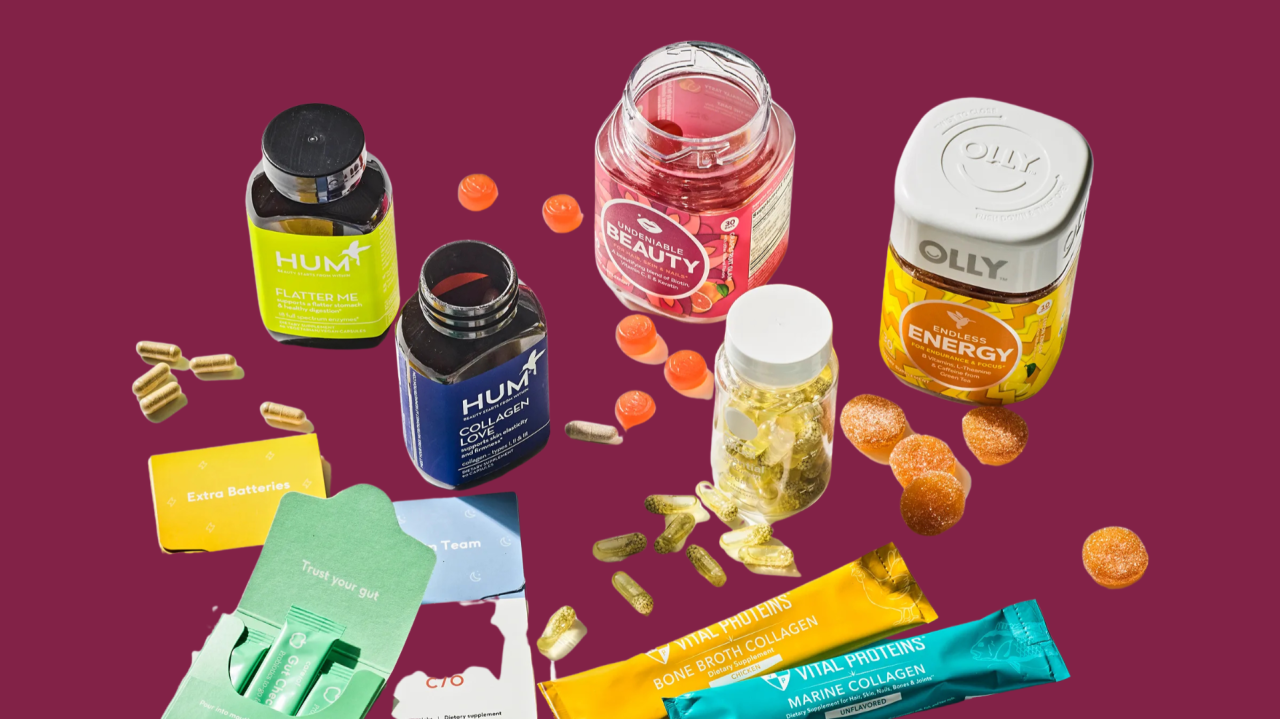
The same applies to mushroom-based supplements. Consumer interest is high, claims are bold and regulatory tolerance is low. Recent restrictions on certain ingredients, including specific Cordyceps species, highlight a broader trend. Ingredients linked to cognition, mood or immunity are being examined closely, both for novel food status and for the claims attached to them.
If a product sits on the boundary between lifestyle and medical, 2026 is the year that boundary will be enforced.
We expect 2026 to mark a pivotal moment in beauty’s evolution into a health-integrated category, with metabolic beauty taking centre stage. As consumers increasingly view beauty through a holistic wellness lens, products are being positioned as supporting wider physiological systems rather than purely cosmetic outcomes.
From a regulatory perspective, this trend sits uncomfortably close to medical and physiological claims. Brands will need far tighter claim substantiation and carefully controlled wording to avoid drifting into medicinal product or medical device territory. Scientific ambition does not override legal limits.
Emotional wellbeing is shaping the future of beauty, with innovations in fragrance, sound and tactile experience shifting focus toward how products are experienced.
However, this comes with risk. Strongly implied emotional or psychological benefits can quickly become problematic if they suggest therapeutic outcomes. Sensory experience is acceptable. Emotional treatment is not. Claims will need to remain firmly grounded and proportionate.
Another defining trend for 2026 is the growing divergence between UK and EU regulatory frameworks. As more time passes post-Brexit, alignment can no longer be assumed.
This is already evident in the food supplements sector, where ingredients and labelling that remain lawful in the UK may no longer be permitted in the EU. Titanium dioxide is a clear example. Once widely used as a food additive, it is now prohibited in the EU while remaining lawful in Great Britain. A formulation compliant in the UK can therefore be non-compliant in the EU without any change to the product itself.
Labelling requirements are also diverging. “Not for EU” statements are now required on certain foods and food supplements of animal origin that comply with UK rules but fall outside EU requirements.
In 2026, the question is no longer whether UK and EU rules differ, but whether brands are prepared to manage those differences effectively.
Responsibility is becoming explicit rather than implied.
Regulators are focusing more closely on who is accountable, not just whether documentation exists. This means increased scrutiny of Responsible Persons for cosmetics, UK Responsible Persons and EU Authorised Representatives for medical devices, and clearly identified Food Business Operators for supplements.
If responsibility is vaguely assigned and no one internally can explain how it operates in practice, that approach will not stand up to scrutiny.
ISO standards are no longer viewed as box-ticking exercises.
In 2026, quality systems will be expected to function in practice, not just exist in documentation. ISO 9001 and ISO 13485 are increasingly used as indicators of operational maturity rather than marketing credentials.
For medical devices, regulators and commercial partners are examining how quality systems operate day-to-day. For cosmetics and food supplements, quality management is increasingly linked to traceability, complaints handling and recall readiness. Systems that exist only on paper are becoming easier to identify.
Perhaps the most defining trend is cultural.
Across cosmetics, medical devices and food supplements, brands are moving away from exaggerated promises and toward credibility. Clear labelling. Accurate claims. Evidence-based communication.
This is not because regulation has become more flexible. It is because businesses are recognising that long-term trust is built through compliance, not avoidance.
In 2026, the brands that succeed will not be the ones trying to push boundaries without understanding them. They will be the ones that understand the rules, apply them properly and use Regulatory Affairs as a strategic function.
Regulation has not changed its job.
But tolerance for ignoring it has.